




Intro
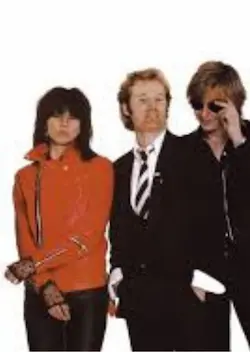
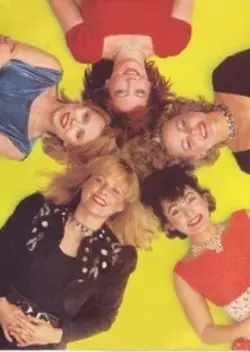
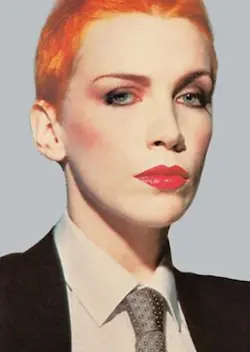
In the late ’70s and early ’80s, new wave cracked open doors for women in ways punk had only hinted at. But empowerment didn’t sound the same across the movement. Chrissie Hynde led the Pretenders with a mix of punk snarl and classic-rock grace, unafraid to be both tough and tender. The Go-Go’s turned girl-group harmonies and surfy guitars into playful but pointed statements of solidarity. And Annie Lennox of Eurythmics used her commanding contralto and theatrical flair to flip the male gaze. Together, they show empowerment in new wave was never one-size-fits-all, but a spectrum of sounds and stances.
"The 'just one thing' before the chorus are like three hammer hits."
Eurythmics: Theatrical Command
Coming in from the synthpop angle is the duo Eurythmics. At their best, synther Dave Stewart comes at you with ice and vocalist Annie Lennox with fire. After their debut, Lennox retooled with a more dynamic, intense vocal approach and androgynous flourishes, and thus Eurythmics found success.
Who’s That Girl?
Who’s That Girl depicts a woman calling out her partner for likely having an affair. The first line (“the language of love slips from my lover’s tongue”) implies he made a verbal slip that served as the smoking gun. Sonically, Who’s That Girl plays to the duo’s strengths. Dave Stewart provides a synth template similar to Sweet Dreams, but shrewdly makes them more ominous. The lyrics are also sharp. But when I first went beyond Eurythmics’ big hits and heard this, I was struck by Lennox’s commanding, soulful contralto. The “just one thing” before the chorus are like three hammer hits. And the chorus says a lot through Lennox’s vocal inflections. In Who’s That Girl, she expressed the hurt, but also she was standing up to herself and I was confident her partner’s comeuppance was imminent.
Beethoven (I Love To Listen To)
On the surface Eurythmics’ Beethoven is a droning, repetitive song: they’ve done that before with You Take Some Lentils and Some Rice and Paint a Rumour. Falco loves Mozart, so Lennox loves Beethoven, right? Actually, her repeated delivery of “I Love to Listen to Beethoven” becomes a mantra of defiance. Lennox’s intense vocals sell that point. And the accompanying video confirms this: Lennox is a doting housewife in demure clothes succumbing to OCD due to monotony. But her true self is shown in the form of an impish girl with a Beethoven-era look. Finally and suddenly, Lennox has had enough and becomes her. The stream-of-consiousness lyrics and end-of-video rampage suggest madness, but it still serves as a great example of forging your own path regardless of gender. And sonically it’s a treat: Stewart runs with the Beethoven metaphor with orchestral hits (these were overused in the mid-80s but somehow Stewart elevates them), along with a classical song allusion in the bridge.
⇩ Eurythmics Song Commentaries Available in the Vault

The Pretenders: Snarl and Sensitivity
The Chrissie Hynde-led Pretenders are an interesting new wave band in that they are strongly influenced from straight-up classic rock: think artists like Bob Dylan, Jimi Hendrix, and the Byrds. But a Patti Smith influence ensures some punk snarl as well, leading to an interesting mix. James Honeyman-Scott’s jagged guitars complement Hynde’s vocal bite well, within a classic rock framework.
Precious
One of Chrissie Hynde’s calling cards was her unapologetic, sometimes confrontational vocal and lyrical style. Precious highlights this. Her channeling of punk’s bravado alone is bold as it was often considered the province of male musicians. The guitar intensity is cranked up to eleven, and the drum hits are accelerated. Recalling early Debbie Harry, Hynde drops some spoken-word sections to build suspense before her vocal attacks in the chorus, making it all the more jarring. And the lyrics are bold: they portray Hynde as sometimes having anger and toughness just like men, and that this needs to be accepted. In the song, she also controls her narrative by rejecting aggressive, unwanted attention.
Kid
Sure, Hynde’s snarl is well-known, but she’s also adept at expressing vulnerability with dignity. For example, in the song Kid, Chrissie Hynde plays a mother whose child is disappointed in her. This is described well (“you turned your head, you dropped my hand”). She knows the reason for this, but is struggling to find the right words to explain. Hynde explained the kid in the song had found out their mother is a prostitute. And for good reason: fighting for survival is hard emotionally for a parent to explain. Add to that the stigma around prostitution, and it’s understandable. Juxtaposed with Precious, Kid shows the Pretenders' versatility, something that helped them make it to album #12 (and counting). Precious was a great, punkish sonic attack. With Kid, that retreats in favor of classic rock - guitars become twangy (reminiscent of the Byrds), drum hits gentler and less repetitive. And it’s also done effectively.
⇩ Pretenders Song Commentaries
The Go-Gos: Playful Solidarity
As mentioned in my Women of New Wave article, the Go-Gos were the first all-female group (that played their own instruments) to reach the upper-chart echelon. Empowerment was a strong themes throughout their albums: sometimes obviously, sometime subtly.
This Town
We Got the Beat was a great, straight-up anthem of girl power. But a track on the same album, This Town, is more complex. While its melody is also upbeat, This Town it skewers the LA Hollywood scene the Go-Go were immersed in. Wiedlin describes washed-up stars as floundering on the streets like abandoned cars. Then the chorus is a sarcastic siren call to join in.
Yet there's empowerment beneath the cynicism: the Go-Go's were young women out in LA, conscious of their sexuality and increasingly in control of their own lives. Sure, this town may be ruthless, but they're claiming their place in it.
That tension is amplified by the hook-laden sonics. For example, while the Go-Gos have an affinity for early ‘60s girl groups, This Town adds surf guitars as an additional nod to pre-Beatles rock. It's made all the better thanks to Carlisle/Wiedlin harmonizing smoothly.
Girl of 100 Lists
A more playful song on the Go-Gos catalog, Girl of 100 Lists doesn’t seem like a female empowerment song: on the surface, Wiedlin seems to be prosaically rattling off things she’s done and needs to do. But indirectly it works: she’s humanizing herself in the face of men’s objectification of women. Just like them, Wiedlin has guilty pleasures (“trashy novels and leather gloves”), clothing preferences, and errands to do (“we’re out of toothpaste”). The last verse is telling as she lists a few guys she’s dated. In the ‘80s there was more pressure for women to settle down, and not “play the field”. Through her lists, Wiedlin is setting the song’s tone as matter-of-fact. Including these guys toward the end equates dating around with running out to get toothpaste: something that shouldn’t raise eyebrows. And with a runtime of well under three minutes, the length of Girl of 100 Lists gallops at a brisk pace.
⇩ Go-Gos Song Commentaries Available in the Vault

Outro
From Chrissie Hynde’s snarling defiance to the Go-Gos playful solidarity to Annie Lennox’s theatrical command, these bands proved empowerment in new wave wasn’t a side note but its heartbeat. Each offered a different path - toughness, camaraderie, reinvention - yet all pushed against the limits placed on women in music. Taken together, their songs remind us that empowerment isn’t a single sound, but a chorus of voices reshaping rock on their own terms.
Four More Empowering Bands
The story of female empowerment in new wave didn't end with three trailblazers. Four more bands challenged expectations in their own ways - through harmony, theatricality, icy confidence, and fearless individuality: showing just how many paths women forged through the genre.Vault members unlock this and five other bonus writeups (2- to 3-minute reads)
Available in the vault Vault login
A new one every month.
($8/month USD) Secure checkout with Gumroad