


Intro
New wave produced some of the most iconic one-hit wonders of the 1980s. These songs didn’t just climb charts - they became cultural fixtures, endlessly recycled in commercials, movies, and karaoke bars. Yet, behind each “one-off” hit was usually a band with more depth, quirks, or missteps than history remembers. This article digs into a handful of those stories, looking at what made the hits stick and what the world missed out on.
“One-hit wonder” is a nebulous term: To pick these, how big does the band’s hit have to be compared to their other singles? Also, these definitions change over time. For instance, Falco had a smash hit with Rock Me Amadeus. But Vienna Calling was no slouch with a top-20 showing in the States. So Falco wasn’t a one-hit wonder (in America) until Vienna Calling faded from their music conscience. To muddy it further, in Germany and Austria he kept having top 10 hits until his passing in the late ‘90s so I’d argue he was never a one-hit wonder there.
With that in mind, I compared the bands’ two most popular songs (on Spotify). Then I picked six bands from that list with compelling backstories.
"Baltimora is unique in that they’re new wave with a splash of Italo Disco."
Kajagoogoo - Too Shy
Added May 2026 A one-hit wonder in the US, new romantic band Kajagoogoo came around its latter, shinier phase in 1983 with their debut White Feathers, produced by Duran Duran's Nick Rhodes and their own producer. Their lead single Too Shy opened with a memorable funky bassline intro before vocalist Limahl croons, much like ABC's Martin Fry, albeit more feathery. The chorus is one of the most memorable in new wave thanks to its strategic repetition, along with Limahl's impeccable timing delivering it. The "do-do-do-do" vocals are callbacks to both doowop and Hungry Like the Wolf, and the funky guitars are melded surprisngly good with the glossy synths. And its video is actually a bit trippy, as a lounge a cocktail waitress is working at transforms into a World War 2 victory party. Unfortunately Kajagoogoo fired Limahl, but his story didn't end there as he racked up several solo hits.
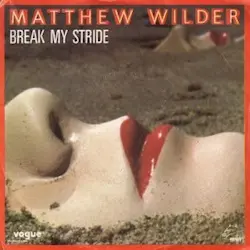
Matthew Wilder - Break My Stride
Wilder sonically and visually reminds me of the poppier sides of contemporaries Duran Duran and the Thompson Twins (BTW Sandler's best friend in The Wedding Singer is Wilder's doppelganger Wilder’s doppelganger). In 1982 he released a debut single Work So Hard which got a little radio play but that’s all. But he regrouped and followed it up with his debut album. It had Break My Stride, which soon became a solid top-10 hit across the world. Even in the mid ‘90s when I was in high school it’d get decent radio play. And now it has logged almost half a billion Spotify listens.
Like some Police tracks, Stride (and other tracks on Wilder’s debut) has a reggae rhythm, but is sonically different thanks to a bright, bouncy synth and upbeat vocals. Lyrically it’s (slightly) darker as he’s recovering from a breakup. But Wilder is determined that it won’t “break his stride”. He actually scored a minor hit with the follow-up The Kid’s American but it was quickly forgotten.
So he had an initial flop, then a monster hit only to have his music career as an artist evaporate. Still, it didn’t break his stride and he kept on moving. He helped catapult No Doubt to stardom stardom by producing their monster sophomore album Tragic Kingdom. And he even got an Oscar nomination a few years later.
Give the title track a chance: it’s slower and moodier (in it he abandons his wife for the tropics) but continues with the reggae flavor.
More detail on Break My Stride
Break My Stride - 486M listens
I Don’t Speak the Language - .6M listens
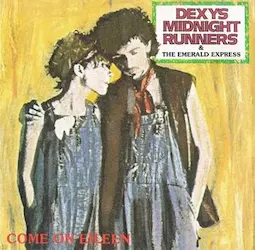
Dexy’s Midnight Runners - Come on Eileen
It’s obvious Come on Eileen has epic staying power (a billion Spotify listens don’t lie). And to be honest, I bristled a bit at it being so ubiquitous. But setting that aside, I realized that both Come on Eileen and Dexy’s in general have an interesting pedigree. Their music has ska elements, making them similar to the Specials and the Jam. But they also leaned on ‘60s American soul (they even dedicated a song to soul shouter Geno Washington). And finally, don’t forget their Celtic elements, such as their folksy fiddles.
Yes, the follow-up Come on Eileen topped many charts. But it doesn’t compromise, as its a great melding of the two styles. The horns and syncopated rhythm are nods to ska. But Kevin Rowland’s impassionate vocal delivery is certainly soulful, and the folk fiddles and the Irish jig of a bridge add even more flavor. The lyrics are also really cool: It’s a ‘60s nostalgia trip for the narrator, and he pleads with Eileen to join him in his revelry. Truly, Come on Eileen is much more than a wedding reception staple or karaoke standard. And give Geno some love - the horns and other instrumentation are ska but it’s set to a soul rhythm.
Come on Eileen - 987M listens
Geno - 27M listens
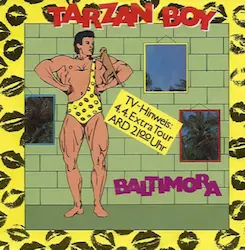
Baltimora - Tarzan Boy
Baltimora is unique in that they’re new wave with a splash of Italo Disco. In fact, Tarzan Boy was sometimes included and fit well in Italo Disco compilations. Not surprising since the band are all from Milan, except for Northern Irish singer Jimmy McShane, who they recruited as their flamboyant face. As for the song, the synths sound Italo, though the melody is slower. Lyrically it also has elements of Italo in its simple but strong message with lyrics like “monkey business”, “jungle life, you’re far away from home”. Of course, Shane’s singing version of Tarzan’s yell in the chorus was one of the stronger hooks in new wave history. Growing up in the ‘90s I remember Tarzan Boy getting a lot of airplay… as a Listerine commercial. A bit later it it was featured in the third Ninja Turtles movie (samurai warriors from the 1200s were boogeying to it in a Manhattan night club). Baltimora tried to replicate Tarzan Boy’s jungle-pop magic with tracks like Woody Boogie (yes, Woody Woodpecker is the guest vocalist), but outside Italy it barely made a ripple. Which only makes Tarzan Boy loom larger today - a global hit so bright it eclipsed everything around it.
Tarzan Boy - 330M listens
Woody Boogie - 8M listens
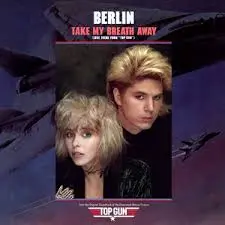
Berlin - Take My Breath Away
Berlin was a respectable band in the new wave annals: critics liked them and they had a devoted fan base. They were influenced by Debbie Harry's edge and Bowie's showmanship, with some Numan/early Ultravox ice mixed in. But they were under the radar for many. It was like this for three albums until 1986 when they got tapped to do the flagship song for the Top Gun soundtrack. Hypothetically, Take My Breath Away would likely have been their biggest hit even if it wasn’t attached to this blockbuster. Vocalist Terri Nunn is excellent in selling this straight-up love song. And the instruments make the song larger than life, but not quite Berlin (where are the jagged guitars?). I discovered why: Giorgio Moroder and his synths (he’s not known for having a light producer’s touch)! Its certainly a solid ‘80s ballad, and the soundtrack tie-in catapulted it to legend status. Even today it’s well-known, notching almost a billion Spotify listens. But I believe it unfairly pigeonholed the band as softer and poppish (think a Lionel Richie sound), which is far from the truth. For instance, my favorite The Metro has a fast, catchy synth base and interesting lyrics.
Take My Breath Away - 802M listens
The Metro - 18M listens
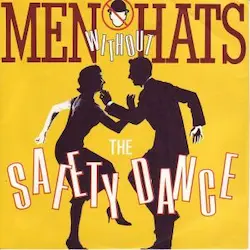
Men Without Hats - Safety Dance (Short Version)
I have a soft spot in my heart for Canadian new wave band Men Without Hats. Their debut single I Like gives them an "A" for effort but it failed to chart. The follow-up Safety Dance hit it big, a top 10 hits in many countries (but interestingly not Canada). The synths go down like good whiskey: powerful yet smooth. And vocalist Doroschuk’s commanding baritone makes for a gripping combo. Plus this light-hearted sound is paired with intriguing lyrics: it was inspired by Doroschuk and his friends pogo-ing in Canadian nightclubs. This jumping up-and-down move is a less aggressive precursor to moshing. Nevertheless, it earned them many ejections. So Safety Dance was a cheeky rebuke to those clubs. But it also works as a joyful ode to inclusivity. The accompanying video reinforces this with its surreal, Renaissance Faire setting.
What’s overlooked is Men Without Hats’ late '80s and '90s output: for example, 1987’s Pop Goes the World keeps their signature synths but the lyrics go even deeper and Doroschuk’s vocals are mellow. Eventually they reconciled the two angles and made catchy songs with deep or dark lyrics. In spite of their one-hit status, their catalog showed great range.
Safety Dance - 303M
Pop Goes the World - 14M listens
Available in the Vault ⇩ Men Without Hats Song Commentaries

Honorable Mention - M - Pop Muzik
Robin Scott’s project M may suffer in searchability, but it excelled at bouncy synthpop that felt like a prototype for Thomas Dolby and the Buggles. When the band debuted in 1977, most pop acts still treated synthesizers as gimmicky sound effects borrowed from Krautrock or TV detective themes (I'm looking at you, Rockford!). Two years later, Pop Muzik broke that mold - a playful, futuristic single that shot to #1 in the UK and cracked the US top 10 as well.
Pop Muzik - 55M, M Factor - .2 M listens
Available in the Vault
Outro
One-hit wonders often get treated as pop curiosities, but in the case of new wave, they’re part of the genre’s DNA. These artists didn’t all fade into obscurity - some reinvented themselves behind the scenes, others kept producing thoughtful work that just didn’t chart, and others left behind a single moment of brilliance that still echoes decades later. If anything, their uneven legacies remind us how unpredictable the 1980s pop landscape was - where one great hook could carry you into history, even if the spotlight didn’t last.
Like this article? The Vault has bonus writeups on five articles.
A new one every month.
($8/month USD) Secure checkout with Gumroad